A relationship structure that cannot account for exit is not consensual in any serious political sense. It may be consensual in the narrow legalistic sense. It may satisfy the workshop definition. It may have agreements, check-ins, shared language, color-coded calendars, and a truly demonic number of acronyms. But if the least secure person cannot leave without losing shelter, community, and reputation, the structure is not free. It is a room with a decorative door.
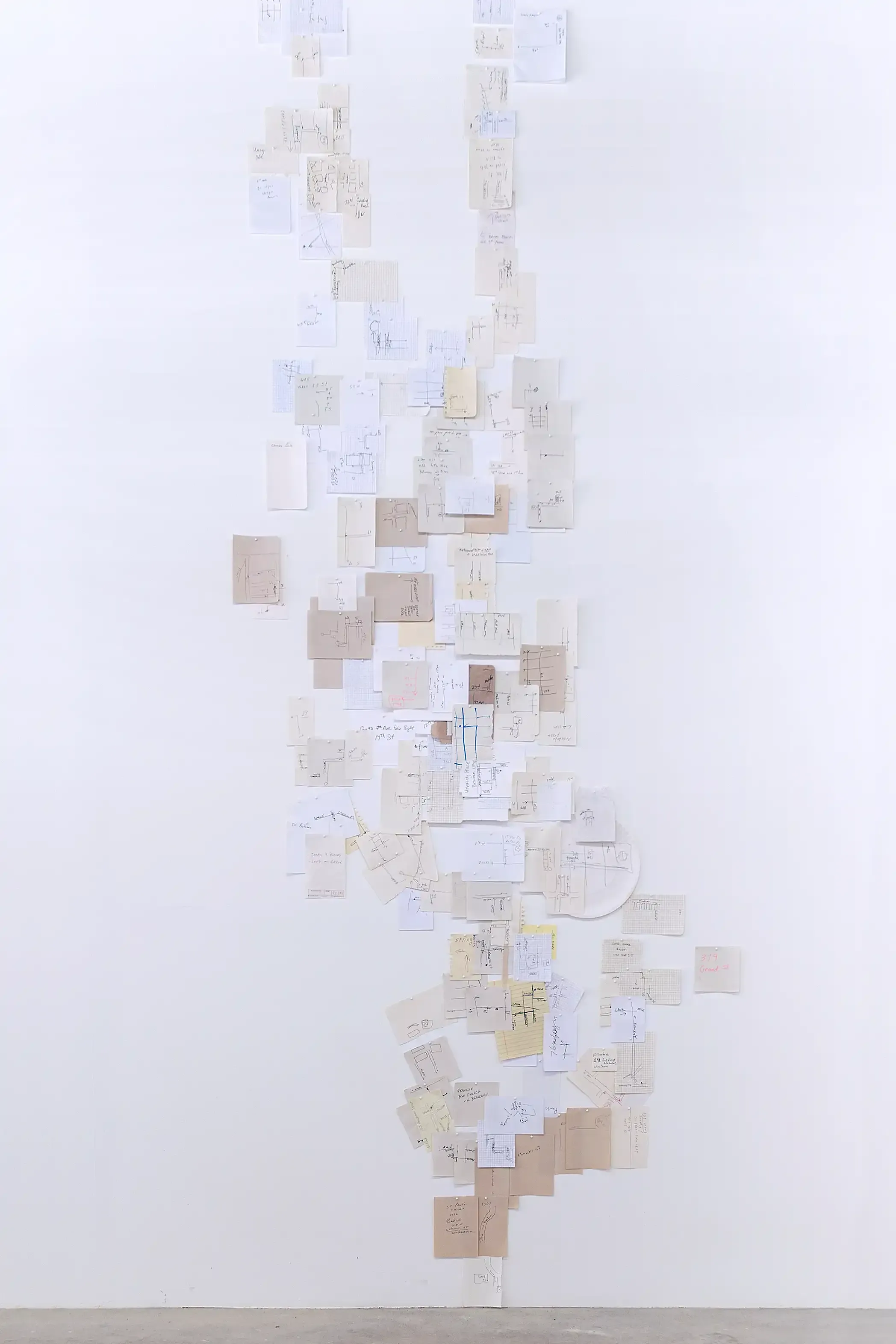
Source: Your Polycule is Not a Revolution by Tara Knight
In the end, I decided to let it go, because who in the world would understand its meaning once I was gone?
Source: How to Practice by Ann Patchett
In this context, healing doesn’t mean correcting the past. And it doesn’t mean crafting a version of yourself somehow untouched by your unresolved history. To envision that form of recovery is to misconstrue the nature of early experience: it’s not something we outgrow but is something we grow through and from. The traces left behind are structural.
Source: Being small by Tom Wooldridge
on I wandered
with arms and nitric startled eyes,
nitpicking my way through the world
when the electrical current
that runs in all directions
deep beneath the earth
shook me
and at once I felt
there are so many years to fail
that to fail them all, one by one,
would give me a double life,
and I took it.
Source: Crackerbell (fragment) by Mary Ruefle
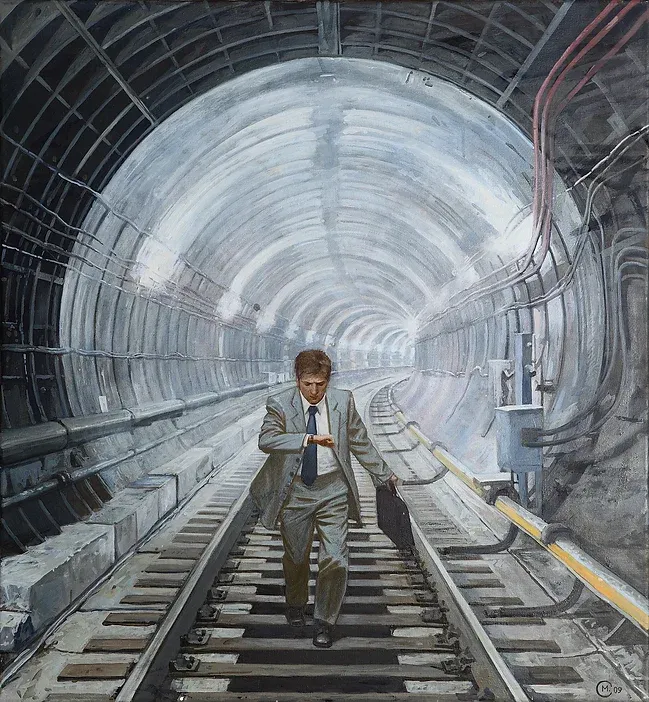

Source: White Rabbit’s Morning by Maria Safronova
In a single moment, colonialism goes from a plundering campaign for recently-unemployed soldiers to a permanent institution. The alchemists back in Prague and Vienna never learned how to turn lead into gold, but the mercenaries and taskmasters in Potosí found a much simpler equation to turn blood into silver.
Source: apricops
The problem is no longer getting people to express themselves, but providing little gaps of solitude and silence in which they might eventually find something to say. Repressive forces don’t stop people from expressing themselves, but rather, force them to express themselves. What a relief to have nothing to say, the right to say nothing, because only then is there a chance of framing the rare, or ever rarer, the thing that might be worth saying.
Source: Negotiations by Gilles Deleuze
One, drenched in French school of morphology, might say that humanity might have the relatives in the societies of chimpanzees or bonobos, or whatever ape the dug out of the forest dirt. One, however, might note that the local power station, giving heat and electricity to your home and moving the trolley or a tram you take to work gives more ontological influence for your body than any simian ancestry. One might also note that humanity is not genetic, but contagious. Wild children might adapt to their environments pretty good, but they will lack even the features their body will have obvious signs of selection to. One might even note that at some point there were 20+ species of hominids coexisting, with the advent of civilization wiping all but a single landrace of a single subspecies of a single species in the only extant genus. Reasonable doubts arise as to whether they really died due to the ‘lack of food’. There’s a truth to the myth of Promethaeus. Fire was necessary for early humans. One might say, that the wildfire is an ancestor of humanity. A wildfire, a power that brings down even the strongest dominants of a successive ecosystem, making way for species of, ah, ‘disturbed ecosystem’. Wildfire, which releases hoarded carbon into the atmosphere with an enormous burst of energy. Sounds familiar?.. Humanity’s cousin is the Big Red Spot, a storm capable of swallowing earth-class Rocky planets, nearly eternal by constantly devouring energy of the planet and releasing it as heat. Thomas Sankara really was onto something when he noted that you cannot kill an Idea. But reading Vygotsky and interacting with iterations of what is now plural community make it very clear that killing a revolutionary - an image, no, an incarnation, an equivalent, recursive instance of capitalism’s concrete contradictions, is also really fucking hard, and shooting an ape possessed results at best at some memory loss. Drunk parties do the same, if you have not noticed. People failed to figure out how brain produces consciousness, and the answer is that it probably fucking doesn’t. Consciousness is produced in library dust, in the hum of seed bank refrigerators, decades-old phagemid collections, a small workshop making spark plugs for silicon CVD. So, yeah. An ape is incidental.
Source: MercurialBadger (on now defunct Cohost)
We read to inherit the words, but something
is always between us and the words.
Until death, when comprehension and disappearance
happen simultaneously.
Source: OBIT (Voicemail) by Victoria Chang
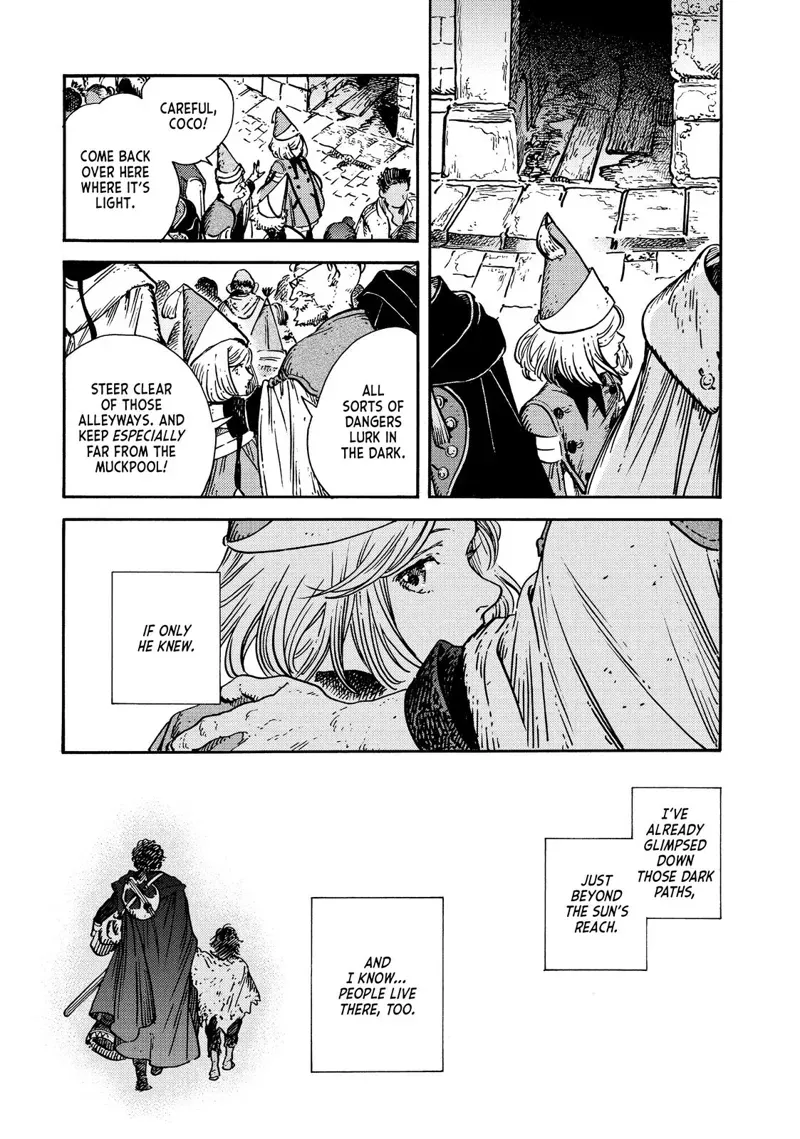
Source: Tongari Boushi no Atelier by Kamome Shirahama

Source: What will remain of us by Mansour Aoun
I am, somehow, less interested in the weight and convolutions of Einstein’s brain than in the near certainty that people of equal talent have lived and died in cotton fields and sweatshops.
Source: The Panda’s Thumb by Stephen Jay Gould
We break our story into eight parts because there are eight of us to tell it tonight. It is our job to be one-eighths of ourselves. We break our audience into eight clusters. We shift from cluster to cluster. We don’t do rows. We don’t do circles. What we do is cellular structure. We are a living biology. Every part is different each time. Each cluster is different every time. The story is the same. We have been broken so many times we are unbreakable. We have been forced apart so many times we are always connected. That is our story. We are growing smaller and smaller and larger and larger at the same time. It doesn’t matter in what order we get everything. It only matters that we get everything.
Source: Order by John Lee Clark
(…) it is a serious thing just to be alive on this fresh morning in this broken world.
Source: podcastwizard
When there is rest, everything else passes out of existence. To rest is not to be. To do is to be. Mine is not a world of being; it is a world of becoming. The world of being, the silent, still world where things simply are, that does not exist. The rockery, the pavilion, the skyline of high-rise flats, the flagpoles over the cricket ground, none of this is really there. The world of happenings, of movement and conflict, that is there.
Source: Notes on Blindness by John M. Hull
The Livermore Bulb probably did not have a soul. It was largely glass and filament through which electricity ran. It did not know us, and it did not know its own royalty.
It was the oldest functioning electric being in the known universe. It was our dearest ancestor. Year over year, century over century, it continued to astonish us: it was, after all, a light bulb that stayed on for more than 15,000 years without burning out or breaking. It was a miracle, and yet, it did not occur to us that it could die.
Perhaps in a more fearsome age, an age of illness and warfare and cosmic debris, we would not have room in our hearts to care for such a little bulb. But we are living in an age without loss. This is a sorrow we have forgotten how to experience.
Source: 17776
…You ever wonder if this is Heaven now? You ever wonder if we’re all just there now and we don’t know it?
I’ve thought about that. All of us have. There’s a lot less people who go to church than there used to be, because that’s what a lot of people think.
But I don’t think so. But I think about it. And I think, well, I can’t be. Because I’m like you, I kinda look at the big long life ahead of me that stretches out forever and disappears. And I get scared. And I think, “this can’t be Heaven if I’m getting scared, right?”
And then I think, “maybe I am in Heaven, and Heaven is scary.”
Source: 17776
God doesn’t know
who you are. Here we are, working
so hard, assuming He’ll notice and show us
some sweetness, but He can’t tell,
in this concatenation, one from the next. All He senses
is everything’s running, everything’s replicating
smooth as can be. We’re down here crossing
every t: grading the hillsides, milling
the wheat, inflating the basketballs, riding sideseat
in the circulator bus called Hollywood Clockwise.
Sunset and Western. Sunset and St. Andrews.
We’re pumping into the air His preciousholl
six principal pollutants; we’re informing each other,
per His request, that who goes to Heaven
and who goes to Hell is more of a numbers game
than anything else. Sunset and Wilson. Sunset
and Gower. Stop. Stop. Stop. Stop. Stop.
Source: Hollywood Clockwise by Natalie Shapero
I’ve been thinking about what that’s like. Not existing, I mean.
Well, I guess we’ll never know.
Ten and Juice are really broken up about the bulb.
I know … I was so sad to hear about it. Truly tragic. It meant a lot to me, I can only imagine what y’all must be going through.
They’re more sad about it than me … it’s like they’re not used to saying goodbye to anything.
No, none of us are. Best problem to have, I suppose.
I guess so.
You know, my grandpa had this big neon sign he always had in the family room. It said “GO BROWNS” on it in big letters and had that brown helmet. I think he brought it home from one of his buddies at the bar or something, couldn’t say for sure.
My grandma thought it looked tacky, I remember she’d always say, “you can turn that thing on after I go to bed.” That was the compromise.
[laughing]
The night he passed away, I was staying the night. My grandma woke me up in the middle of the night and said a neighbor was coming by to watch me, that Grandpa had passed on. They’d already taken him away. And in the middle of everybody runnin’ around, there were a few minutes there where I was just there by myself in the family room, and that sign was the only thing on. And it just softly lit up the room in this beautiful sort of orange-y brown.
I was eight years old then, and I remember just kinda standing there and looking at the light, and the room. And you know what I thought?
I remember thinking how strange it was that the light was still on. I thought that, well, if he was gone, then the light he switched on should’ve turned off. That as soon as he went, everything should go with him.
But there it was, though. Just glowing.
Source: 17776
Going under that water is like going back through time. Everything is like it was. All the buildings were built, all the cars were neatly parked, all the garbage cans were bolted to the sidewalk, by people who were afraid to die. It was the meticulous craftsmanship of terrified people.
We didn’t know we’d have each other for good. Back then there was real fear. Real worry. The world was all fucked up. I remember feeling so alone. Like I was the only one fighting it.
We were all in it together, though. Every stranger you ever met, they were fighting the very same fight you were. Of course, you didn’t talk about it with them, but all of us saw that terror, the terror any mortal person has. That terror wasn’t natural. No other creature in the universe woke up every morning knowing it was guaranteed to die one day. Just us. Nobody should have to live with that. It’s too much, it isn’t right. No one ever should have had to bear it.
But we did. We all stared it down and kept on going. And we did it together, we were all in it together. It felt lonely, but we were never alone.
We all had each other, no matter how often we forgot it. All of us, we always had each other.
Source: 17776
You know, I never went to New York. Never even visited. I don’t know why I didn’t. I remember watching Sesame Street when I was little, and I liked how people would just sit on their steps and talk to each other in front of these nice and neat and square buildings. And all they had to do was cross the street or go next door to talk to each other.
Then I went to school, got a job, you know, you get busy. And it’s …
Who was it who said, uh, “even if life is forever, each moment of it is a miracle?” I think that’s just something we tell ourselves. We’re just ordinary and forever, I think. There’s a leveling out that happens if you live forever and ever without anything to lose.
New York was probably just one more place with a lot of buildings. But I missed seeing it, that’s a thing I lost. That’s one of the only things I’ve ever lost. Thinking about that kind of gets me right in the heart. Like a little xylophone hammer is, you know, just hits it. … It’s a note we never play anymore.
Source: 17776
“I wonder if there’s a single place in the whole world that’s never had a story. I bet not. I just about guarantee you there’s no places like that in America. Every little square of it, every place you stomp your foot, that’s where something happened. Something wild, maybe something nobody knows about, but something. You can fall out of the sky and right into some forgotten storybook.
You run and run and run and you keep turning pages and none of them are empty. They’re all full of stories. There’s nowhere left to write.
I think I’m just a bookmark.“
“Seems okay to me.”
Source: 17776
I have been lonely in so many cities
and now I am lonely in absence
of the city, the crowd at the Met
that made me small and whole
as a seed.
Source: Still Life with Sky, Coffee, Tulips, Anna Karenina, and God by Shannon Pratson
Shivers: I AM LA REVACHOLIÈRE. I AM THE CITY.
You: What do you mean, you are the city?
Shivers: I AM A FRAGMENT OF THE WORLD SPIRIT, THE GENIUS LOCI OF REVACHOL. MY HEART IS THE WIND CORRIDOR. THE BOTTOM OF MY AIR IS RED. I HAVE A HUNDRED THOUSAND LUMINOUS ARMS. COME MORNING, I CARRY INDUSTRIAL DUST AND LET IT SETTLE ON TREE LEAVES. I SHAKE THE DUST FROM THOSE LEAVES AND ONTO YOUR COAT. I’VE SEEN YOU, I’VE SEEN YOU! I’VE SEEN YOU WITH HER — AND I’VE SEEN YOU WITHOUT HER. I’VE SEEN YOU ON THE CRESCENT OF THE HILL.
You: How are you talking to me?
Shivers: THE MODULATIONS OF MY VOICE ARE NOTED DOWN WITH THERMOMETERS AND BAROMETERS. YOU FEEL ME IN YOUR NOSTRILS, ON THE LITTLE HAIRS ON THE BACK OF YOUR NECK. I ALSO RESIDE IN YOUR LUNGS AND VESTIGIAL ORGANS. EVERYWHERE THERE IS SPACE.
Rhetoric: All this eloquence — it’s in service of something. She’s afraid.
You: What are you afraid of?
Shivers: DEATH — IT IS TERRIFYING. I NEED YOU TO PROTECT ME FROM DEATH. I CANNOT PERISH. LOOK AT ME. I CANNOT END. IN 22 YEARS, THE FIRST SHOT WILL BE FIRED. NOT A SHOT FROM A GUN — AN ATOMIC DEVICE THAT WILL LEVEL ALL OF ME. ALL OF ME.
You: But… what can I do about it?
Shivers: YOU ARE AN OFFICER OF THE CITIZENS MILITIA. YOU MOVE THROUGH MY STREETS FREELY IN MOTOR CARRIAGES AND ON FOOT. YOU HAVE ACCESS TO THE HIDDEN PLACES. YOU ALSO CIRCULATE AMONG THOSE WHO ARE HIDDEN. I NEED YOU. YOU CAN KEEP ME ON THIS EARTH. BE VIGILANT. I LOVE YOU.
Source: Disco Elysium (2019)
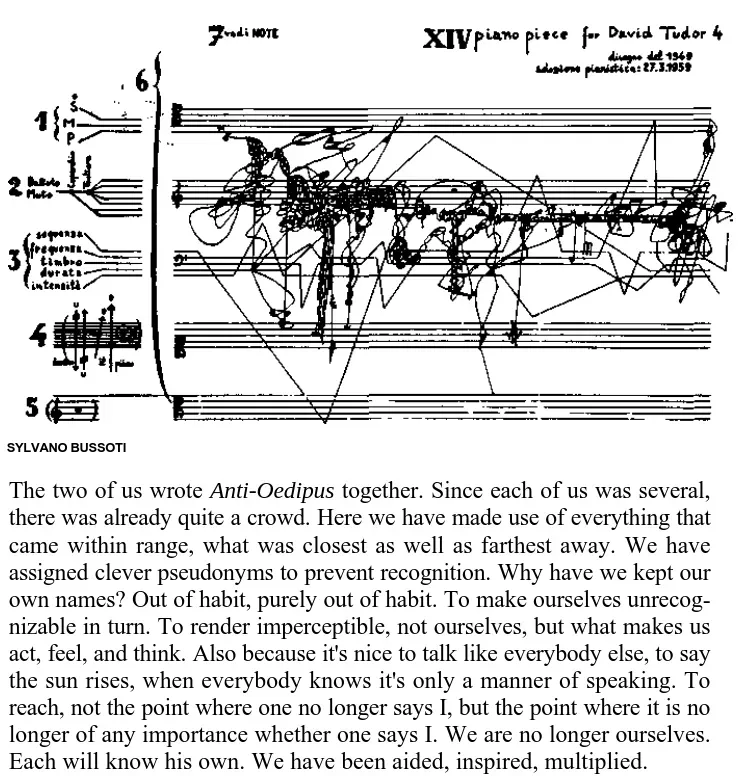
Source: A Thousand Plateaus: Capitalism and Schizophrenia by G. Deleuze and F. Guattari
I also love octopuses because they can escape from anything. They do it by relinquishing form. I think about that for us, often. It’s why I pull away from the institutionalization of things and from the idea that structures have to stay a certain way. In order to get out of capitalism, we’re going to have to move like an octopus; it’s going to be a small exit.
Source: Adrienne Maree Brown
So much of emergent strategy is inspired by Octavia Butler and the idea that all that you touch, you change, and all that you touch also changes you back. For most of us who strive to create change, we love that first part—“all that you touch, you change”— yes! But the idea that we’re also being changed is much harder for us to contend with. For this reason, the book provides strategies for how to adapt with intention. How can we understand that change is non-linear? How can we understand that change happens through relationships?
Source: Adrienne Maree Brown
I make all my decisions on intuition, but then I must know why I made that decision.
I throw a spear into the darkness. That is intuition.
Then I must send an army into the darkness to find the spear. That is intellect.
Source: Ingmar Bergman
On fewer days I agree
with the poet’s dread of being
the wrong person in the right world, and believe
in adhesion, in never showing up
empty-handed, even if the pleasure I know best
is fused with the abject.
Source: Pleasure by Rick Barot
Despite being ostensibly about advanced digital technology, Digimon stories are actually about caring for and growing closer to others. They assert that power comes not from the individual, but from the bonds that individuals form with one another, and they maintain that when passionate people unite in the name of a common goal, they can change the world. It’s easy to be pessimistic about the role that technology plays in our lives, but Digimon stories insist that the internet is primarily a method of connecting us, even when we are separated by unfathomable distance.
Source: A Million Points of Light, a Digimon fanzine for Palestine
Grief is the process of love learning to adapt to a new reality - no longer able to orient to what is, or even what could be; now only able to retain and protect the memory of what was.
It is the inevitable price of caring. Nothing lasts - everything is changing into something else. To care is to sign up for future grief; but there is symmetry, here, if we can bring ourselves to allow it: grief, too, does not last, and like all things, will change into something else.
To shirk our grief is to devalue our caring. What we feel deserves to be felt, fully, until it is done.
To embrace it all, with softness, is a difficult and rare choice - but an unspeakably beautiful and powerful one.
I will always choose to care.
And so I will always choose to grieve, when it is time.
Source: A post by @mordremoth@lgbt.io in memory of Zoe (porsupah); the domain who hosted their accounts and this post is dead.